Introduction
With the growing demand for clean and cost-effective energy, solar power has become one of the most preferred solutions for homeowners, businesses, industries, and educational institutions. However, one of the most common questions people ask before installing a solar system is:
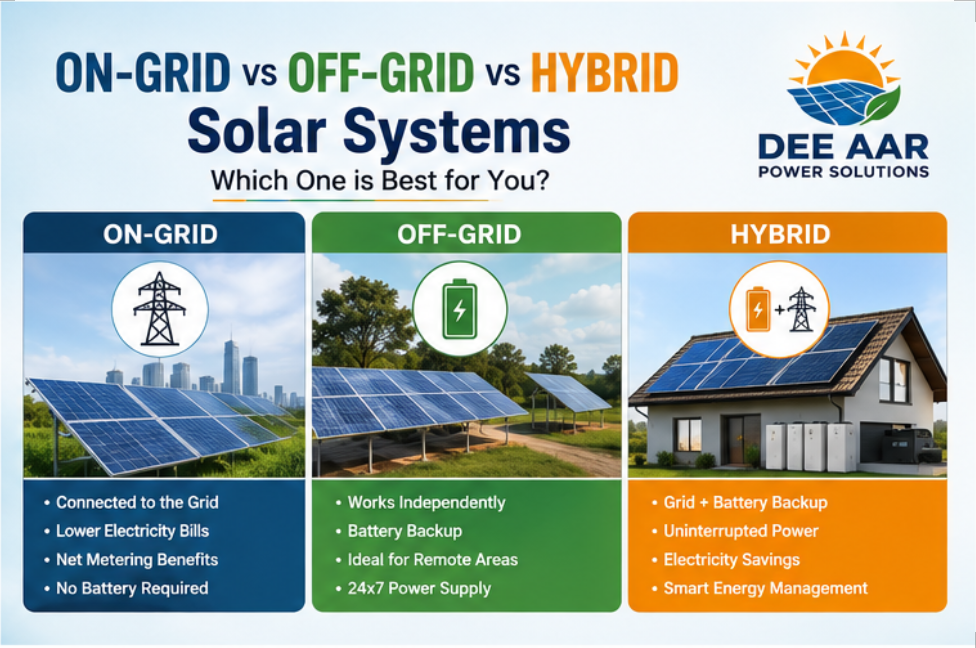
Which type of solar system should I choose—On-Grid, Off-Grid, or Hybrid?
Each solar system is designed to meet different energy requirements and offers unique advantages. Choosing the right one depends on factors such as your electricity consumption, location, power backup needs, and budget.
At DEE AAR Power Solutions, we provide customized solar solutions for residential, commercial, industrial, and institutional customers. This guide explains the differences between On-Grid, Off-Grid, and Hybrid Solar Systems to help you make an informed decision.
Understanding Solar Power Systems
A solar power system converts sunlight into electricity using photovoltaic (PV) panels. The electricity generated can either be used immediately, stored in batteries, or exported to the electricity grid, depending on the type of system installed.
The three most common solar systems are:
- On-Grid Solar System
- Off-Grid Solar System
- Hybrid Solar System
Let’s explore each one in detail.
What is an On-Grid Solar System?
An On-Grid Solar System, also known as a Grid-Tied Solar System, is directly connected to the local electricity grid. During the day, solar panels generate electricity to power your home or business. If your system produces more electricity than you consume, the excess energy can be sent to the utility grid through Net Metering, subject to local regulations.
At night or when solar generation is low, electricity is drawn from the grid.
Main Components
- Solar Panels
- Solar Inverter
- Mounting Structure
- Safety Devices
- Net Meter (where applicable)
Advantages of On-Grid Solar Systems
Lower Electricity Bills
One of the biggest advantages is significant savings on monthly electricity expenses.
High Return on Investment
Since no batteries are required, installation costs are generally lower compared to other solar systems.
Low Maintenance
With fewer components, maintenance requirements are minimal.
Environmentally Friendly
Generate clean energy while reducing dependence on fossil fuels.
Net Metering Benefits
Where available, surplus electricity can be exported to the grid, helping maximize the value of your solar investment.
Best Applications
An On-Grid Solar System is ideal for:
- Homes
- Apartments
- Offices
- Schools
- Colleges
- Commercial Buildings
- Shops
- Hospitals
What is an Off-Grid Solar System?
An Off-Grid Solar System operates independently without relying on the electricity grid. It stores excess energy in batteries, allowing electricity to be used during the night or during cloudy weather.
This makes it an excellent choice for locations where grid electricity is unavailable or unreliable.
Components of an Off-Grid System
An Off-Grid Solar System typically includes:
- Solar Panels
- Solar Inverter
- Battery Bank
- Charge Controller
- Mounting Structure
- Safety Equipment
Benefits of Off-Grid Solar Systems
Complete Energy Independence
You are not dependent on the utility grid.
Continuous Power Supply
Stored battery energy provides electricity during power outages.
Ideal for Remote Areas
Perfect for villages, farms, resorts, and locations without reliable electricity.
Eco-Friendly
Produces clean energy while reducing the use of diesel generators.
Best Applications
Off-Grid Solar Systems are recommended for:
- Farms
- Remote Villages
- Resorts
- Farmhouses
- Construction Sites
- Agricultural Projects